Alison Christie and Scott Phillips of Boise State University in Idaho used ethyl cyanoacrylate, the main ingredient in superglue, to create a plastic that could replace polystyrene, which is commonly used in yogurt jars, disposable cups and cutlery and accounts for 6 percent of plastic waste. Ethyl cyanoacrylate can be made from formaldehyde, which in turn can be made from carbon dioxide. This material can easily be recycled over and over again. Although the polystyrene we mentioned here is also marked with the number 6, it is rigid polystyrene, not the expanded polystyrene that has been processed by the foaming process. Expanded polystyrene can also be called EPS. This material has excellent shock absorption and is light in weight. There is no suitable substitute at present, but fortunately, this non-degradable plastic is also 100% recyclable.
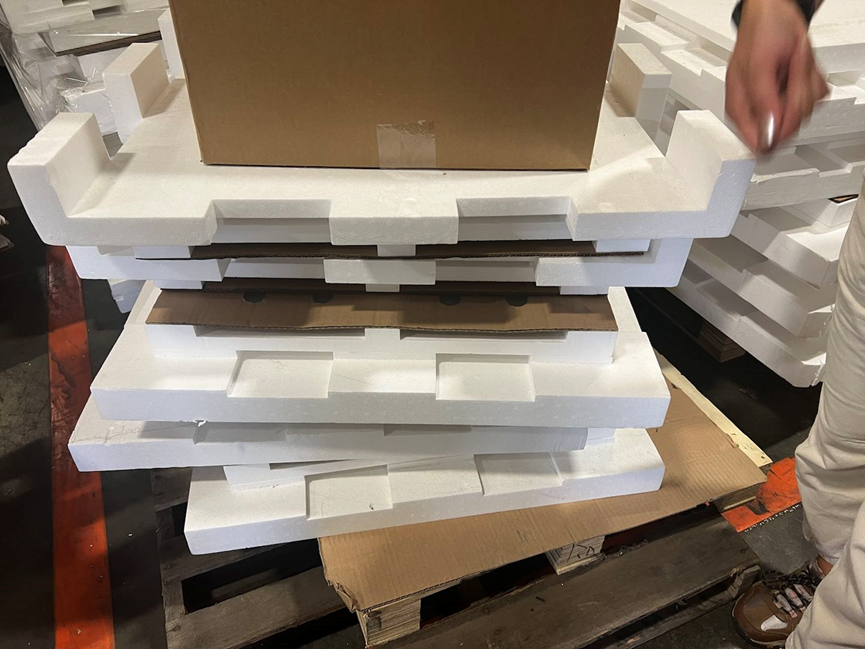
Expanded polystyrene needs to be processed by foaming process, so what is foaming process? Products produced by polymerization of styrene monomer. However, polystyrene itself does not foam, but has foaming properties by adding additives that easily generate expandable gas at high temperatures during the synthesis reaction. It is precisely because of this foaming technology that endows this material with excellent shock absorption and compression resistance. The main step in recycling expanded polystyrene is to squeeze out 98% of the air as much as possible, otherwise this behemoth cannot be transported.
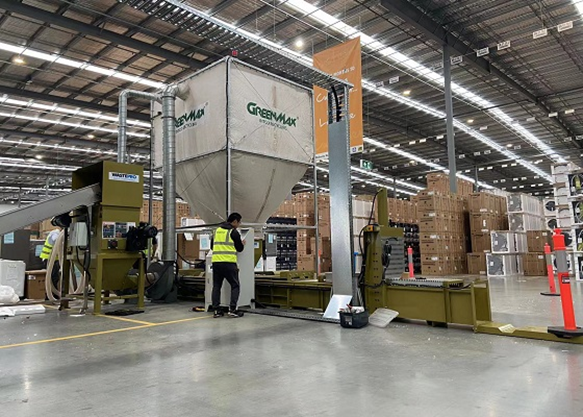
GREENMAX hydraulic compactor has been on the cusp of recycling equipment recently, because hydraulic compactor uses a hydraulic technology different from screw extrusion, which increases the compression ratio from 50:1 to 70:1, and is more energy-efficient than hot-melt technology. The expanded polystyrene compressed by the hydraulic compactor is very compact and can be sold to downstream industries smoothly! These hydraulically compressed expanded polystyrene are less prone to chipping and help the factory to maintain a clean 5S. It is not easy to loosen the compressed EPS blocs when handling them, resulting in waste of raw materials and secondary pollution.