Foam packaging and insulation waste often arrives in large, irregular shapes. EPS boxes, EPE sheets, EPP automotive packaging and XPS insulation boards may all require different downstream recycling processes, but they share the same first step: the material needs to be broken into a manageable size.
A foam crusher cuts this bulky material into smaller pieces so it can be conveyed, stored temporarily or fed into compacting and pelletizing equipment more consistently. For manufacturers, warehouses and recycling facilities handling several foam waste streams, one properly configured crusher can support more than one type of material..

EPS, EPE, EPP and XPS differ in density, elasticity and structure. EPS and XPS are relatively rigid, while EPE and EPP are more flexible and resistant to impact. These differences affect the required blade design, motor power, feeding method and discharge size.
A GREENMAX foam crusher can be configured around the materials a customer actually handles. Where several foam types are involved, they can be processed in separate batches with the same machine, provided the crusher configuration is suitable. Material testing is recommended before the final configuration is selected, especially for dense EPP parts, flexible EPE sheets or thick XPS boards.
Foam Crusher for EPS, EPE, EPP and XPS
Different foam types should also remain separated during recycling. Crushing EPS, EPE and EPP with one machine does not mean they should be mixed together, since each polymer follows a different recycling route and produces a different recycled material.
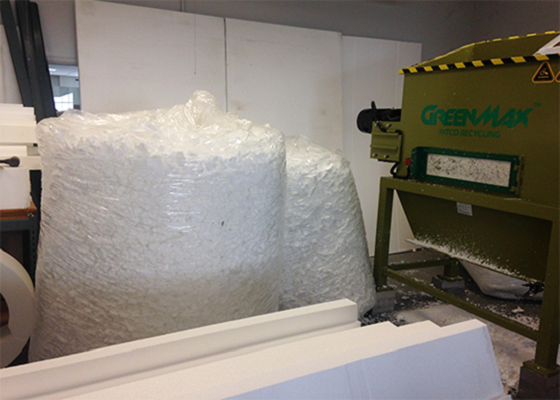
GREENMAX Foam Crusher in a Recycling Facility
One recycling facility collected foam waste from packaging companies, appliance manufacturers and construction material suppliers. Its incoming material included EPS electronics packaging, EPE cushioning sheets, EPP automotive packaging and XPS insulation board offcuts.
Previously, the larger foam pieces had to be broken down separately before they could enter the next recycling stage. The GREENMAX foam crusher allowed the facility to process these materials in separate batches with one configured machine. After crushing, each foam type could be directed to the appropriate compaction or pelletizing equipment.
The crusher did not replace the downstream recycling process. Its role was to create smaller, more consistent material that could be handled and fed more efficiently.
Choosing a Foam Crusher
The right foam crusher depends on more than the total waste volume. The foam type, density, original dimensions and required discharge size all influence the machine configuration. The next step in the recycling process also needs to be considered, since material prepared for a densifier may require a different output size from material intended for pelletizing.
For sites handling several foam types, the practical approach is to test representative samples and confirm whether one crusher can cover the full material range. When properly matched to the waste stream, a GREENMAX foam crusher provides a stable link between bulky foam waste and the equipment used for compaction, densification or pelletizing.