With the increasing awareness of environmental protection and the increasing importance of resource recycling, recycling of waste materials has become an important task in modern society. Expanded polystyrene (EPS) is a lightweight foam widely used in packaging and construction materials, but its recycling has always faced challenges. This article will introduce how to use an EPS compressor to recycle waste EPS and use the recycled materials to make photo frames, demonstrating the environmental and economic benefits of this process.
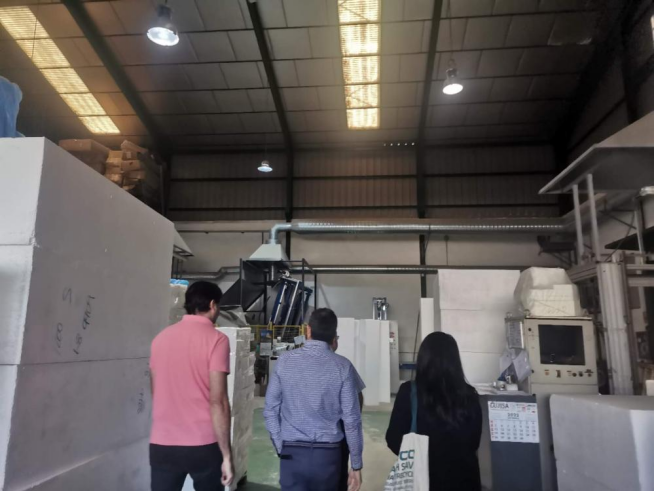
EPS Characteristics and Recycling Challenges
EPS is widely used in packaging, electrical appliances, building insulation and other fields because of its light weight, good insulation performance, and strong impact resistance. However, EPS waste is large in size and low in density, which brings great difficulties to transportation and recycling. If not recycled, EPS waste not only takes up a lot of landfill space, but also causes long-term pollution to the environment.
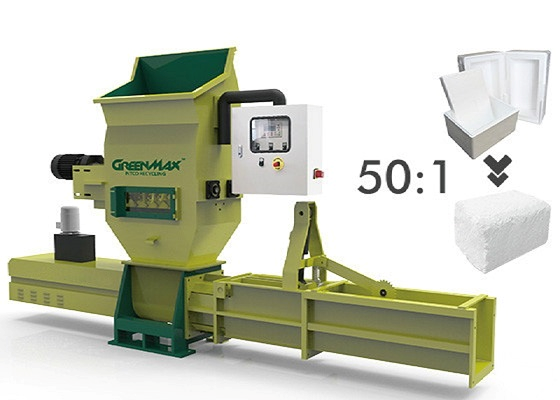
EPS compactor is a device specially used to process waste EPS. Its main working principle includes the following steps:
Crush large pieces of EPS waste into small pieces for subsequent processing. Use a screw extrusion device to squeeze the air in the crushed EPS as cleanly as possible. At least 98% of the air can be squeezed out. Using the GREENMAX EPS compactor can reduce the volume of EPS waste to 1/50 of its original size, thereby greatly reducing transportation and storage costs.
The process of making picture frames from recycled materials
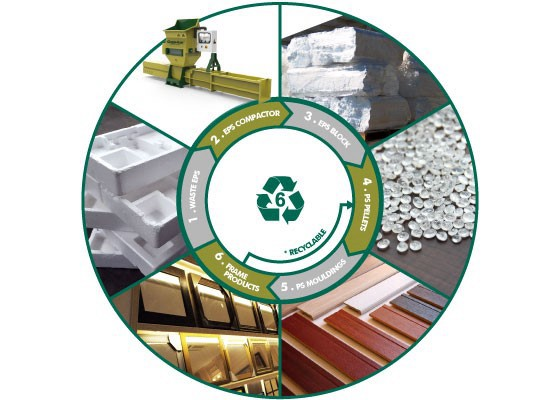
Using recycled EPS materials to make picture frames is an effective way to convert waste into high value-added products. GREENMAX not only provides EPS compactors, but also repurchases EPS blocs and uses these recycled materials for granulation to manufacture environmentally friendly photo frames.
Raw material preparation: further crush the high-density EPS blocks processed by the EPS compactor, mix an appropriate amount of additives, such as colorants, etc., and put them into the granulation equipment for granulation.
Mold making: Make photo frame molds according to design requirements. The quality of the mold directly affects the final quality and production efficiency of the photo frame, so it requires precision design and processing.
Injection molding: Inject the prepared EPS raw materials into the mold through an injection molding machine. After high-temperature heating and high-pressure injection molding, the basic structure of the picture frame is formed.
Cooling and shaping: The injection-molded photo frame is cooled in the mold. After it is completely solidified, it is taken out for subsequent processing.
Surface treatment: As needed, embossing, stickers and other processes are carried out on the surface of the photo frame to improve the aesthetics and added value of the product.
By using the EPS compactor to recycle waste EPS and use it to make photo frames, it can not only effectively reduce the environmental pollution of waste EPS, but also create significant economic benefits.