Expanded polystyrene (EPS) is widely used in the production of protective packaging for computers and electronic equipment. Because EPS provides excellent cushioning, shock resistance, and lightweight protection, it is commonly cut into customized shapes that securely hold devices during transportation. However, during the manufacturing process of computer packaging, cutting EPS blocks into precise forms inevitably generates a large amount of EPS offcuts and edge scraps. These leftover materials quickly accumulate in production facilities, creating storage challenges and increasing disposal costs. For many manufacturers, an EPS compactor has become an effective solution for managing and recycling these EPS wastes.
EPS cutting scraps generated during computer packaging production are usually lightweight but extremely bulky. Even a small quantity can occupy a significant amount of warehouse space because EPS contains up to 98 percent air. When these loose scraps pile up, they can disrupt production flow and make waste handling more difficult for workers. Transporting unprocessed EPS waste is also inefficient and expensive because trucks quickly fill up with low-density material. By using an EPS compactor, manufacturers can dramatically reduce the volume of EPS waste and convert it into dense blocks that are easier to manage and recycle.
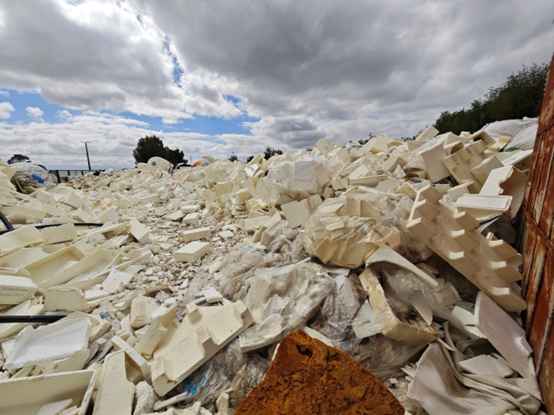
An EPS compactor works by compressing loose foam through a powerful screw mechanism. EPS scraps are fed into the hopper where the rotating screw crushes and compresses the foam. As the material moves through the chamber, its air content is removed and the EPS becomes compacted into solid, high-density blocks. This process can reduce the volume of EPS waste by up to 50 times, making storage and transportation far more efficient. The compressed blocks can then be sold to recyclers who process them into recycled polystyrene pellets used in manufacturing plastic products.
A computer packaging manufacturer in North America recently installed a GREENMAX EPS compactor to manage the EPS offcuts generated from cutting protective inserts for desktop computers and monitors. Before introducing the equipment, the factory struggled with large piles of EPS scraps scattered around the cutting area. Workers had to frequently collect and bag the waste, and the company paid high transportation fees to remove the bulky material.
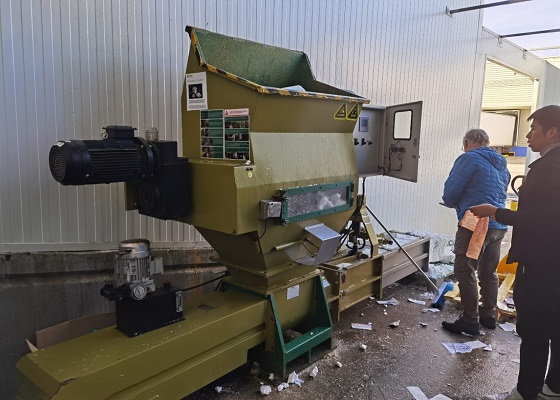
After implementing the GREENMAX EPS compactor, the factory placed the machine near the EPS cutting line so that offcuts could be fed directly into the compactor during production. The equipment continuously compressed the loose foam into dense EPS blocks, greatly reducing the volume of waste stored in the facility. The compacted blocks were then sold to recycling companies, allowing the manufacturer to recover part of the waste management costs while improving the cleanliness and efficiency of the workshop.
Today, the EPS compactor plays an important role in recycling EPS waste generated from computer packaging production. By compressing EPS offcuts into dense recyclable blocks, manufacturers can reduce waste volume, lower transportation costs, and support a more sustainable recycling system for EPS materials.