EPS fish boxes are widely used by seafood processors, wholesale markets, fishing ports and cold-chain distributors because they are lightweight, insulated and resistant to moisture. After the seafood is unloaded, however, the same boxes quickly become a waste-management problem. Used fish boxes are bulky, often wet and may contain salt, ice or organic residue. When they are stored without treatment, they occupy valuable space, create hygiene concerns and require frequent waste collections.
The GREENMAX APOLO Marine Series foam compactor is designed specifically for these demanding coastal and seafood-processing environments. Compared with a standard EPS compactor, the Marine Series features upgraded stainless-steel components that provide better resistance to moisture, salt and corrosion. This makes the equipment more suitable for fish markets, seafood factories, ports and other sites where wet EPS packaging is generated every day.
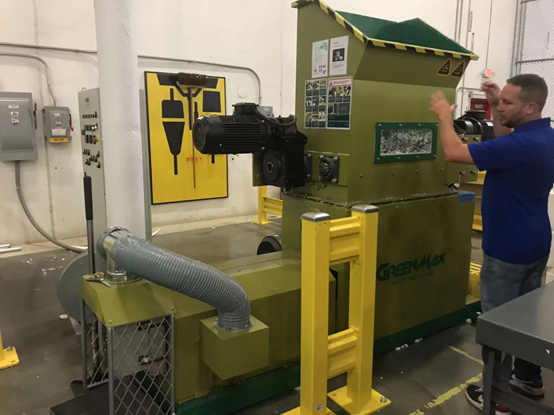
Before processing, used fish boxes should be emptied, cleaned and drained. The boxes are then fed into the machine, where they are crushed into smaller pieces. A screw-compression system continuously squeezes and compacts the material into dense blocks. The process can reduce the volume of EPS by up to approximately 50:1, while also helping remove part of the remaining water from the foam.
This volume reduction immediately lowers operating costs. Loose fish boxes contain mostly air, so collection vehicles become full long before they reach an efficient payload. After compaction, far more EPS can be loaded onto each truck, reducing collection frequency, fuel use and transport cost per tonne. The compact blocks are also easier to stack, helping seafood companies recover warehouse space and maintain a cleaner recycling area.
In one GREENMAX project, a salmon packaging business faced continuous pressure from large quantities of wet EPS fish boxes. The loose boxes filled the waste-storage area rapidly and required frequent removal. After introducing a GREENMAX Marine Series foam compactor, the company was able to process the boxes directly at the source. The compressed blocks were more stable, easier to store and economical to transport to a downstream recycler.
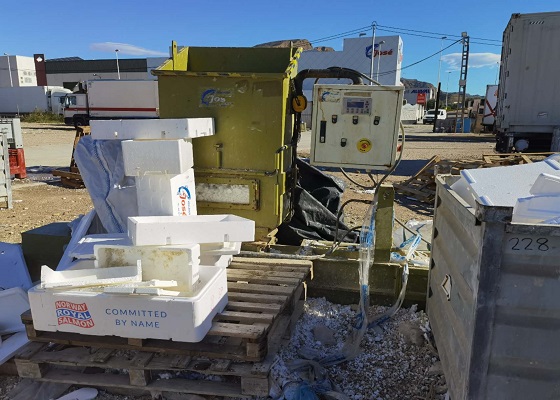
Instead of being treated as costly general waste, the compacted EPS could enter the recycling chain and be processed into recycled plastic pellets. These pellets may later be used to manufacture picture frames, decorative mouldings, plastic profiles and other products.
For seafood businesses, the GREENMAX Marine Series offers more than simple volume reduction. It transforms wet and bulky fish boxes into a manageable recycling resource, helping companies reduce disposal costs, improve site organisation and create new value from a previously difficult waste stream.