PE foam (polyethylene foam) is a lightweight material with excellent buffering properties, widely used in packaging, construction, electronics, automotive, and other fields. However, as its usage continues to increase, the environmental problems caused by discarded PE foam have become increasingly prominent. Due to its low density, large volume, and long natural degradation cycle, improper disposal not only occupies a large amount of land resources but also poses a risk of soil and water pollution. Therefore, exploring scientific and efficient methods for PE foam recycling is of great significance for reducing environmental pollution and conserving resources.
Characteristics of PE Foam and Recycling Challenges
PE foam is primarily made from polyethylene resin and forms a porous structure through the foaming process, characterized by its light weight, impact resistance, corrosion resistance, and good insulation properties. However, these features also pose certain challenges for recycling.
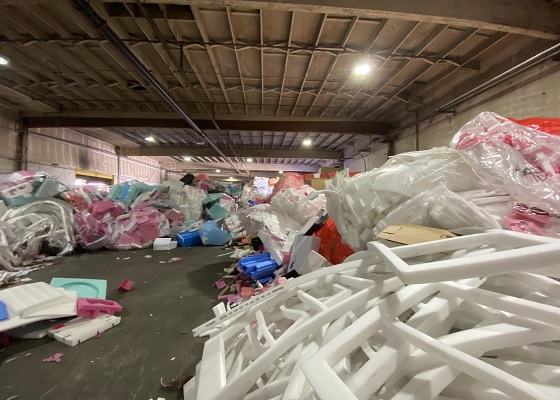
First, there is a contradiction between low density and large volume. The density of PE foam typically ranges from 0.01 to 0.05 g/cm³, meaning that for the same weight, its volume is much larger than that of other plastic products. This results in higher collection and transportation costs during the recycling process and requires a significant amount of storage space, putting considerable pressure on recycling companies.
Second, there is a high content of impurities. In practical use, PE foam often combines with other materials (such as adhesives, paper, metals, etc.), forming composite waste. For example, PE foam used in electronic device packaging may be attached with label paper, while PE foam used in the construction sector may be contaminated with dust, cement, and other impurities. The presence of these impurities can affect the quality of the recycled product and increase the difficulty and cost of the recycling process.
PE Foam Recycling Technologies
Currently, the technologies for recycling and utilizing PE foam mainly include physical recycling, chemical recycling, and energy recovery, with different recycling technologies suitable for different types of waste PE foam, each having its own advantages and application scenarios.
Physical Recycling Technology
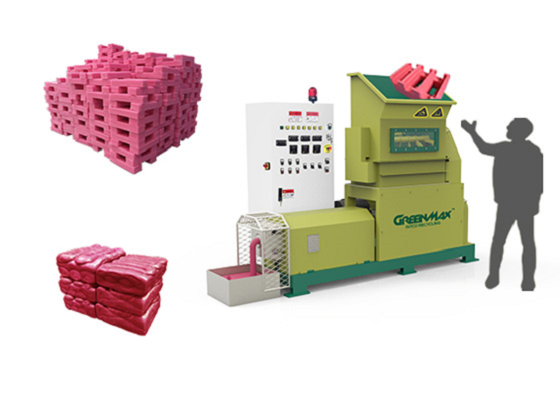
Physical recycling is currently the most widely used technology for the recycling and utilization of PE foam. Its core process involves crushing, cleaning, melting, and granulating, transforming waste PE foam into reusable plastic pellets.
Chemical Recycling Technology
Chemical recycling technology decomposes waste PE foam into small molecular compounds, such as hydrocarbons and monomers, using chemical methods. These small molecular compounds can then be used to synthesize new chemical products or fuels. This technology is suitable for waste PE foam that is difficult to process through physical recycling, such as PE foam containing a large amount of impurities or severely aged materials.