EPE foam, or expanded polyethylene foam, is widely used in various fields such as electronic product packaging, furniture transportation, and building insulation due to its excellent cushioning properties, light weight, and good thermal insulation. However, with the sharp increase in the usage of EPE foam, a significant amount of waste is also generated. Since EPE foam has a large volume and degrades extremely slowly, if discarded carelessly, it not only occupies a large amount of land resources but also causes serious white pollution to the environment. Against this backdrop, utilizing foam recycling machines for the recycling and processing of EPE foam has become a key method to solve this environmental issue and achieve resource recycling.
Characteristics and Recycling Challenges of EPE Foam
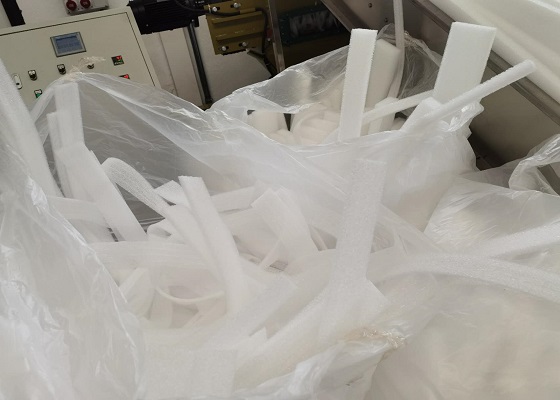
EPE foam is made from low-density polyethylene (LDPE) through a foaming process, which fills its interior with countless closed bubbles, giving it the characteristics of low density (usually between 0.015 – 0.03 g/cm³) and large volume. While this structure endows EPE foam with excellent properties, it also brings numerous challenges for recycling.First, the transportation costs are high. Due to the large volume and light weight of EPE foam, untreated waste EPE foam has a very low loading rate during transportation, resulting in significantly increased unit transportation costs, which somewhat inhibits the enthusiasm of recycling companies. Secondly, storage is inconvenient. A large amount of waste EPE foam requires a huge storage space, which puts tremendous storage pressure on recycling sites or processing plants. In addition, the chemical properties of EPE foam are relatively stable, making it difficult for microorganisms to decompose in the natural environment. If incineration is used for disposal, it releases harmful gases that pollute the air; if landfilled, it will occupy land for a long time and damage the soil structure.
Working Principle of Foam Recycling Machine
The foam recycling machine is a recycling device specifically designed for foam waste. Its core function is to reduce the volume, melt, or decompose discarded EPE foam through a series of physical or chemical methods, transforming it into reusable raw materials. Different types of foam recycling machines have slightly different working principles, with the most common ones being:Compression Volume Reduction Recycling Machine
This type of recycling machine mainly uses mechanical pressure to compress fluffy EPE foam into denser blocks or strips. The working process is as follows: first, discarded EPE foam is fed into the feeding port, and under the action of the conveying device, it enters the compression chamber. The compression chamber has a movable pressing head that, driven by a hydraulic or pneumatic system, applies immense pressure to the foam, squeezing out the air inside and greatly reducing the volume of the foam (usually to 1/10 – 1/30 of its original size). The compressed foam blocks or strips have a high density, making them easier to transport and store, laying the foundation for further processing.
Hot-melt recycling machine
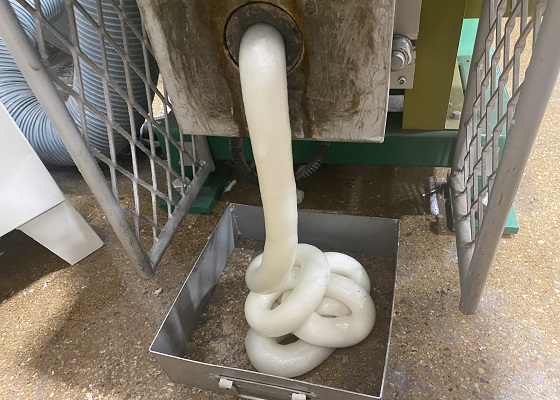
The hot-melt recycling machine utilizes a heating device to melt EPE foam, transforming it into molten polyethylene raw material. Specifically, after the EPE foam enters the recycler, it first goes through a crushing device to be pulverized into fine particles, increasing the heating surface area. The crushed particles are fed into the heating and melting chamber, where, under the action of electric heating or other heating methods, the particles are heated to the melting temperature of polyethylene (approximately 105 – 130°C), gradually melting into a viscous liquid. The molten liquid can be extruded into long strips through an extrusion device and cut into granules after cooling, thus becoming regenerated polyethylene granules that can be directly used to reproduce EPE foam or other polyethylene products.
With the increasing awareness of environmental protection and the strong support for a circular economy from the government, the EPE foam recycling industry will face greater development opportunities. On one hand, the technology of foam recycling machines will continue to innovate and upgrade, evolving towards efficiency, intelligence, and eco-friendliness, improving recycling processing efficiency and quality. For instance, new types of foam recycling machines may integrate functions such as automatic sorting and intelligent control, further reducing labor costs and improving processing accuracy.