I. Current Status and Problems of Insulation Board Waste
Insulation boards are widely used in building exterior wall insulation, cold storage projects, and floor heating insulation. Common materials are expanded polystyrene (EPS) or extruded polystyrene (XPS). Construction cutting, renovation and demolition, and production processes generate a large amount of waste insulation boards. This waste has the following characteristics:
Large volume and low density: This takes up storage and transportation space, increasing recycling costs.
Fragile and contaminated: Construction sites are often filled with dust, cement, paint, and other impurities, reducing recycling rates.
Difficult to directly reuse: Uncompressed insulation boards are difficult to transport economically and difficult to reprocess.
Core Advantages of the Polystyrene Compactor
The Polystyrene Compactor (polystyrene compressor) is a machine specifically designed for reducing the volume of EPS/XPS waste. It efficiently compresses fluffy insulation board waste into high-density blocks for easy storage and transportation.
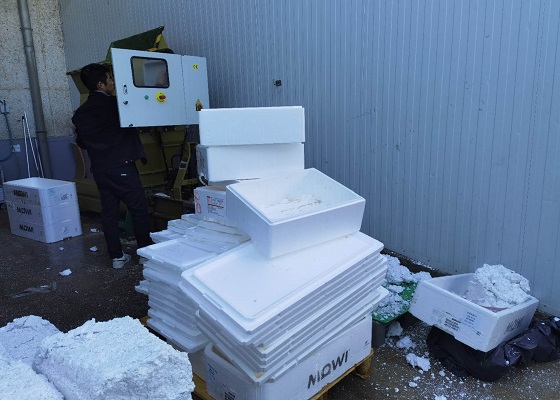
Key advantages include:
Efficient Volume Reduction: It can reduce the volume of waste insulation boards to 1/30–1/50 of its original size, significantly reducing transportation and storage costs.
Adaptability: It can process both clean production waste and construction waste with some impurities.
Easy to Process: The compressed, high-density blocks can be sold directly to plastic recycling companies for use in the production of PS pellets, picture frames, decorative moldings, and more.
Energy-saving and environmentally friendly: The compression process involves physical volume reduction, eliminating the need for additional chemical treatment, reducing carbon emissions and environmental pollution.
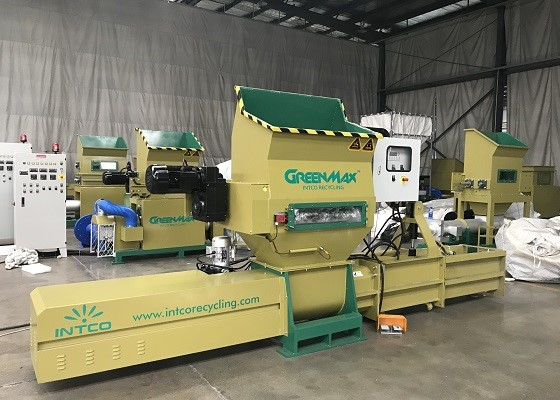
Recycling Process ExampleCollection and Preprocessing: Collect discarded insulation boards generated from construction sites, renovation demolitions, and production processes, and remove larger foreign objects (metal nails, wooden strips, etc.).Crushing (Optional): For larger insulation boards, they can first be crushed using a Foam Crusher to improve compression efficiency.Compression Molding: Feed the insulation boards into a Polystyrene Compactor, where they are formed into high-density blocks through screw extrusion or cold pressing technology.Transport and Reuse: The high-density blocks can be sent directly to plastic recycling plants, where they are made into regenerated PS materials after melting and granulation.A construction company has applied the Polystyrene Compactor to handle discarded insulation boards across multiple projects. By compressing on-site, EPS waste that previously required multiple trucks for transport can now be moved with just one truck. The compressed blocks are sold to downstream recycling companies, generating additional revenue while reducing the cost of construction waste transport, achieving a win-win for both economy and environmental protection.