Expanded Polystyrene (EPS) foam, widely used in supermarkets for fresh food insulation and transportation, poses significant waste management challenges due to its low density and bulky nature. However, cold-press EPS compactors have emerged as a transformative solution, enabling efficient volume reduction and resource recovery. This article explores the technical process, environmental benefits, and European applications of cold-press technology in recycling supermarket EPS waste.
The Mechanics of Cold-Press EPS Recycling
Cold-press compactors operate on a simple yet effective principle: mechanical compression without heat. The process begins with collecting EPS packaging waste—such as fruit trays, meat containers, and shipping insulation—from supermarket backends. The foam is first shredded into flakes using rotating blades, then fed into a screw-driven compression chamber. Hydraulic pressure exceeding 200 bar compresses the material, reducing its volume by 30–50 times and forming dense blocks with a density of 250–400 kg/m³. Unlike hot-melt systems, cold pressing avoids toxic fume emissions and preserves the polymer structure, ensuring high-quality recyclate suitable for downstream processing .
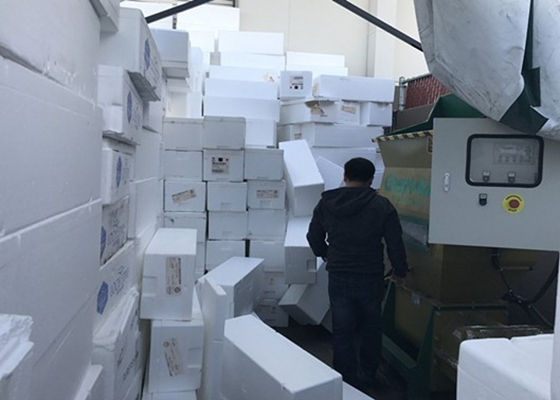
This technology addresses two critical pain points for supermarkets: logistical inefficiency and environmental liability. By minimizing transportation costs and diverting waste from landfills, cold-press systems align with the EU’s Circular Economy Action Plan, which mandates a 55% plastic packaging recycling rate by 2025 .
Environmental and Economic Synergies
The environmental impact of cold-press recycling is substantial. A life-cycle analysis shows that recycling 1 ton of EPS via cold pressing reduces CO₂ emissions by 1.2 tons compared to incineration and saves 1.5 tons of crude oil equivalent. Economically, supermarkets benefit from reduced waste disposal fees—often €80–120 per ton in Europe—and potential revenue from selling compacted EPS blocks to recyclers, currently priced at €200–300 per ton .
Challenges and Future Outlook
Despite its efficacy, cold-press recycling faces hurdles such as contamination from food residues and adhesive labels, which require manual sorting. Innovations like near-infrared (NIR) sensors and AI-driven sorting systems are being deployed to automate separation, improving purity rates to 99.5%. Additionally, the EU’s PPWR mandates that by 2030, all plastic packaging must contain at least 30% recycled content, driving demand for high-quality EPS recyclate .
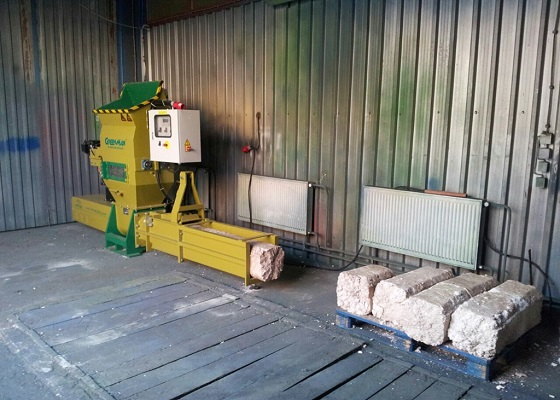
As European supermarkets strive for carbon neutrality, cold-press technology emerges as a cornerstone of sustainable waste management. By transforming lightweight EPS waste into a valuable resource, retailers not only comply with stringent regulations but also contribute to a circular economy where “waste” becomes a feedstock for future production.