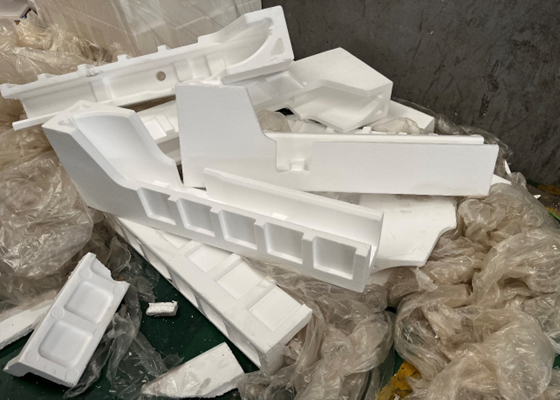
Expanded polystyrene (EPS), often called Styrofoam, is widely used in packaging and insulation but is notorious for its bulky, lightweight nature and low recycling rate. Globally, millions of tons of EPS waste are generated each year, yet less than 10% is effectively recycled because transporting loose foam is expensive and inefficient. This is where mechanical recycling with a polystyrene compactor offers a practical, scalable solution.
How a polystyrene compactor supports EPS recycling
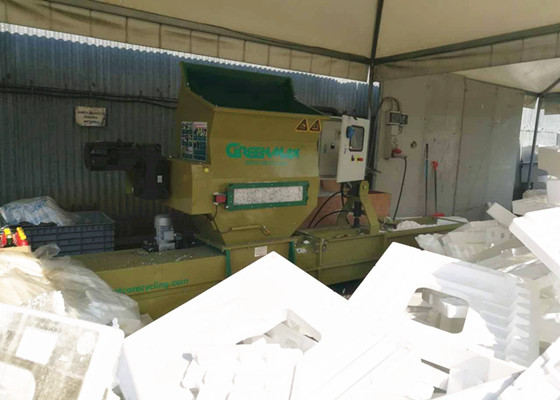
A polystyrene compactor (EPS compactor) is a machine that crushes and compresses expanded polystyrene into dense blocks. GREENMAX APOLO and similar units shred EPS with blades, then use a screw or hydraulic system to cold-press the foam, reducing its volume by up to 50:1. The resulting blocks are easy to stack on pallets, store, and ship.
Once compacted, the EPS blocks are sold to recyclers who further process them into pellets and then into new PS products such as frames, molding, and other plastic items—turning a low-value waste stream into a stable secondary raw material.
Mechanical recycling via a polystyrene compactor has several advantages: the technology is mature, operation is straightforward, capital and operating costs are relatively low, and it can be installed directly at factories, warehouses, or transfer stations.
Comparing mechanical and chemical recycling of EPS
Chemical recycling of polystyrene typically relies on depolymerization—breaking the polymer back down to styrene monomer or other aromatic molecules through thermal or catalytic processes. These routes can, in principle, deliver high-purity monomer and even upcycled products. However, they usually require:
Highly segregated, clean PS/EPS feedstockComplex reaction conditions (high temperature, catalysts, or specialized reactors)
Significant capital investment in centralized plants
Careful control of product separation and purification
As recent studies highlight, many chemical recycling concepts for polystyrene are still at pilot or early commercial stages, and their economics are sensitive to scale, energy prices, and feedstock quality.
By contrast, mechanical recycling with a polystyrene compactor:
Works with typical post-industrial and post-consumer EPS packaging
Requires far less energy than full depolymerization
Can be deployed in a decentralized way, close to where waste is generated
Immediately lowers logistics and landfill costs while generating saleable material
In short, chemical recycling may be a future complement for complex or contaminated streams, but mechanical recycling is currently the fastest and most economical way to scale EPS recovery.
GREENMAX case example
INTCO Recycling, through its GREENMAX brand, provides EPS recycling solutions worldwide. GREENMAX manufactures polystyrene compactors and also purchases compressed foam blocks, converting them into finished products such as photo frames. Every year, INTCO reports recycling around 100,000 tons of waste EPS, avoiding roughly 300,000 tons of CO₂ emissions.
In a typical GREENMAX project, a seafood distributor or e-commerce warehouse dealing with large volumes of EPS boxes installs a GREENMAX EPS compactor on site. Loose boxes are shredded and compacted into dense blocks at a 50:1 reduction ratio, dramatically cutting storage space and transport costs. These blocks are then sold to INTCO or other recyclers instead of being landfilled, turning a disposal expense into a new revenue stream and enabling a circular loop for EPS.
As regulators and brands push for more sustainable packaging, mechanical EPS recycling built around the polystyrene compactor stands out as a ready-to-implement, cost-effective path to keep expanded polystyrene in the value chain rather than in landfills or the environment.