Polyurethane (PUR) foam is used everywhere: in furniture cushions, mattresses, automotive seats, packaging, insulation and more. For many small factories, production generates a steady flow of PUR offcuts, trim and defective parts. If this material is thrown away, it costs money in disposal fees and wastes a potentially valuable resource. A simple, practical first step toward PUR foam recycling is to use a foam crusher to turn bulky scrap into uniform, reusable particles—without adding any compression stage.
A foam crusher is a relatively compact machine that cuts, tears or grinds foam into small flakes or chips. For PUR foam, the goal is not to densify the material but to reduce particle size and make the scrap easier to handle, store and reuse. The crusher usually consists of a feeding hopper, a rotor with blades or teeth, a cutting chamber and a discharge area where crushed foam is collected in bags or bins.
For small factories, the workflow is straightforward. Operators collect PUR offcuts directly from cutting tables, upholstery stations, or assembly lines and feed them into the foam crusher. The machine breaks the foam into small pieces—often between 5 and 30 mm depending on the screen size and blade design. These pieces can then be stored in fabric bags or silos as secondary raw material. Because there is no compaction or briquetting step, the system remains mechanically simple, easy to maintain and relatively low cost.
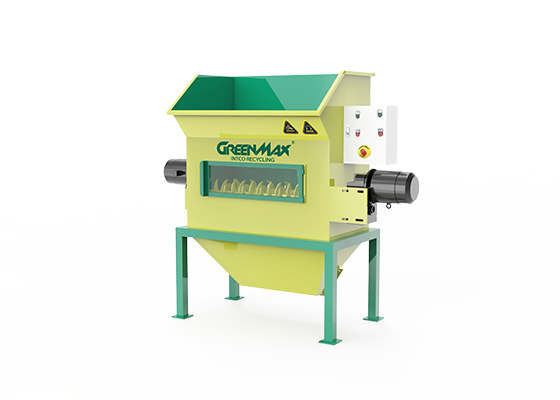
Crushed PUR foam can be reused in several ways. In furniture and bedding applications, foam flakes are commonly used as stuffing for pillows, cushions, pet beds and beanbag-style seats. In some cases, the flake can be supplied to a separate rebonding line, where it is mixed with binder and pressed into high-density rebond foam sheets or blocks. From the perspective of a small factory, the key value is that the crusher converts irregular, inconvenient scrap into a standardized, saleable material that can either be used in-house or sold to partners.
The advantages for small manufacturers are significant:
Cost savings – Less PUR foam is sent to landfill, reducing disposal and transport costs.
Material recovery – The factory can turn waste into a secondary raw material with real market value.
Space efficiency – While there is no compression step, crushed foam still stacks and packs better than large, loose offcuts, improving storage and logistics.
Simple operation – Foam crushers are easier to operate and maintain than more complex recycling systems with densifiers or agglomeration equipment.
When choosing a foam crusher, small factories should consider throughput, particle size requirements, noise level, energy consumption and safety features. A correctly sized machine should keep up with the daily scrap output without causing bottlenecks. Safety is critical: guards, emergency stops and proper training help prevent accidents, especially when operators are feeding flexible foam by hand.
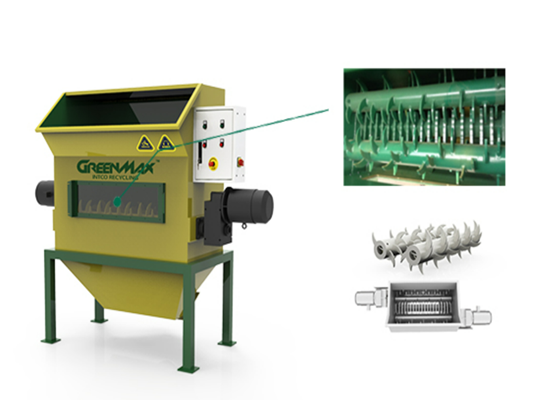
Although crushing alone does not complete the full recycling loop, it is an essential first stage that makes PUR foam scrap manageable and reusable. For small factories that lack the budget or space for full-scale recycling lines, installing a foam crusher is an accessible way to begin recovering PUR material, reducing waste and opening the door to future collaborations with rebond foam producers or other recyclers. By starting with this simple step, small manufacturers can move toward more sustainable production while extracting value from every kilogram of PUR foam they process.