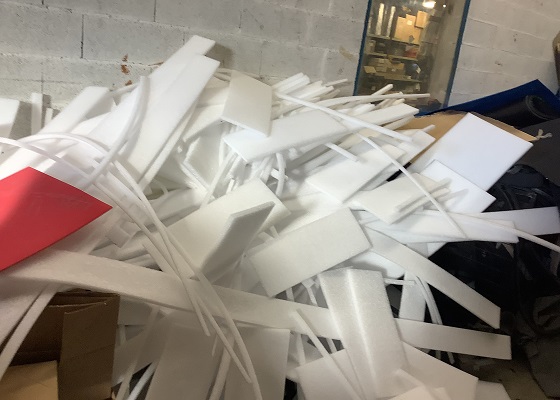
Expanded polystyrene (EPS) and other foam plastics are widely used for packaging and protection, but they create huge volumes of bulky waste. Instead of sending this material to landfill, companies can turn it into a profitable resource by using a foam pelletizing machine as the core of a closed-loop recycling system. GREENMAX, as a specialist in foam recycling, has developed a business model that links foam collection, pelletizing and final product manufacturing into one integrated chain.
The process starts with waste foam collection. Retailers, logistics centers, appliance distributors and other businesses compress their used foam using GREENMAX densifiers or hot-melting machines. This step reduces the volume of the foam dramatically and makes it economical to store and ship. The compacted foam blocks are then sold back to GREENMAX or transported to a central recycling plant.
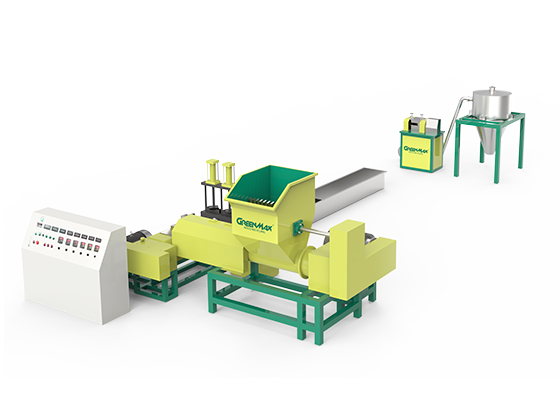
At the recycling plant, the compacted foam enters the foam pelletizing machine. The blocks are crushed, melted and filtered to remove impurities, and then extruded through a die to form uniform plastic strands. These strands are cooled and cut into small, consistent pellets. The resulting recycled plastic pellets have stable quality and can be used as raw material for many downstream plastic processing applications.
GREENMAX’s innovation is not only in the equipment, but in the business model. By offering both foam recycling machines and a material buy-back program, GREENMAX helps its customers reduce disposal costs while securing a steady supply of recycled feedstock. This creates win–win cooperation: foam waste generators gain a new income stream, and GREENMAX gains reliable raw material for its own pelletizing and manufacturing operations.
One of the most successful applications of these recycled pellets is the production of decorative frame strips. The pellets from the foam pelletizing machine are fed into extrusion lines that produce polystyrene profiles with various shapes and surface patterns. After lamination and cutting, these profiles become stylish picture frames and mirror frames. Because the material is lightweight, easy to process and dimensionally stable, it is ideal for framing products sold in supermarkets, furniture stores and online platforms worldwide.
Through this model, waste foam collected from packaging can come back to the consumer as a high-value finished product. The same companies that once threw away foam packaging may now sell picture frames made from that recycled material. GREENMAX closes the loop: foam recycling, pellet production and frame manufacturing are integrated into one sustainable and profitable cycle, with the foam pelletizing machine playing a central role in transforming waste into valuable plastic pellets.