Globally, the EPS recycling situation has become better and better, especially with the help of EPS compactor. In this article you will learn about the recycling situation of EPS and the usage of EPS compactor.
Some larger EPS manufacturing companies around the world have begun to extend the production chain and use EPS recycling as the last link to complete the EPS life cycle. For example, Knauf Group crushes EPS and reintroduces it into the production of new EPS products, that is, Closed-loop recycling, and established a collection and recycling network for expanded polystyrene throughout France, with a daily processing capacity of 3 million tons.
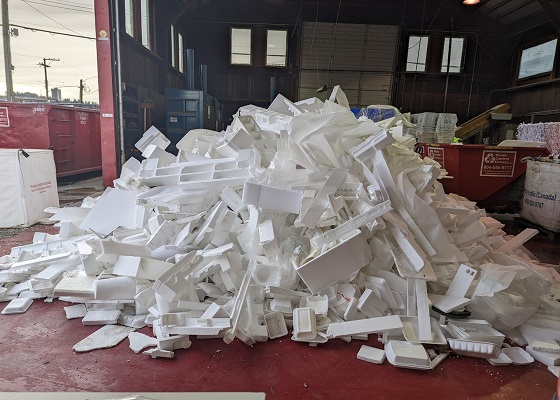
BEWiSynbra Group, Europe’s largest vertically integrated producer of expandable polystyrene, has taken an ambitious approach to its recycling program: a target of recycling 60,000 tonnes per year, accounting for 30% of the company’s 180,000 tonnes of EPS produced annually. Through the acquisition of two recycling companies, EcoFill in Belgium and Eurec in Denmark, new EPS is remanufactured, which has exactly the same shock absorption and thermal properties as the original EPS. Currently BEWiSynbra has recycled 15,000 tons, equivalent to approximately 9%, and plans to achieve the goal within 3-5 years.
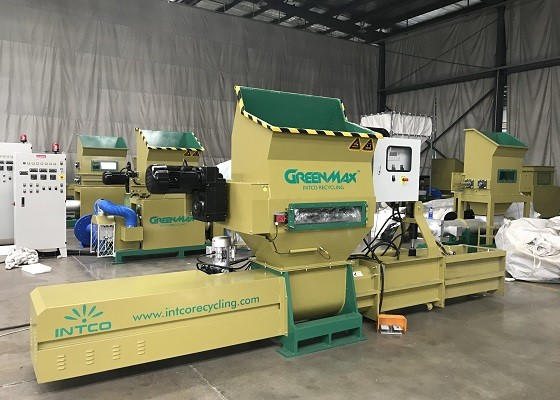
EPS foam compression and granulation are currently the most widely used EPS recycling methods. After polystyrene foam waste is compressed into cold-pressed blocks by a professional EPS compactor, tight foam compressed blocks will be formed. These foam blocks are easier to sell than waste foam loose materials, and the price is about twice as much. If heat is used, Fusion technology, higher compression ratio, will get a better price. Foam compression blocks can be used for granulation to produce high-quality EPS recycled particles, which can be used again in the production of new foam products. In particular, EPS compactor has received considerable praise in recent years. It was initially used heavily in Europe. In recent years, EPS compactor with cold pressing technology has gradually been accepted by customers in various regions in the United States.