Last July, the Chinese government announced that in order to solve the domestic pollution problem, it began to ban the import of 24 kinds of “foreign garbage” from overseas in January 2018, including waste plastics from domestic sources, vanadium, unsorted waste paper and waste. Highly polluting solid waste such as textile raw materials.
When the ban came out, many countries called for “can’t survive.” In South Korea, where the land is thick and thick, the “garbage riots” caused by this are relatively serious. In Gwangju’s garbage dumps, untreated garbage disposals became mountains; in Gimpo City, Gyeonggi Province, residents were also prevented from discarding plastic waste and slammed security guard on the spot… various problems forced the Korean government to take measures to deal with it.

According to the Yonhap News Agency, after China refused to accept “foreign garbage,” most of the garbage removal and classification companies in the South Korean capital circle (Seoul, Incheon, Gyeonggi-do) announced that they will not be profitable from this month. The recycling of PET plastic bottles and white polystyrene lunch boxes has caused the community that signed a garbage collection agreement with them.
GreenMax initially focused on EPS recycling machine, in order to make it more convenient for our EPS recycling business and to enlarge our waste EPS supply sources. However, when realizing the difficulties of dealing with waste PET bottles of the beverage producers and bottle recyclers, GreenMax feels necessary to step into this area and provide professional machinery service for them.
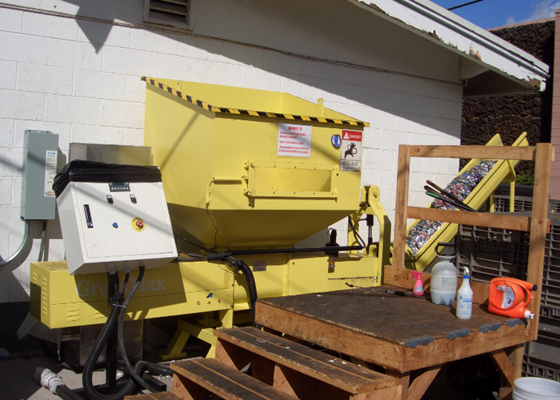
The ongoing “junk riots” finally made the Korean government unable to sit still. According to the Yonhap News Agency, on the afternoon of the second, the Ministry of the Environment of the Republic of Korea said that it is in consultation with the garbage clearing industry that all 48 companies in Seoul, Incheon and Gyeonggi Province will recycle plastic bottles such as discarded beverage bottles and foaming lunch boxes as usual. .
The report said that in order to avoid the crisis of garbage flooding, the Ministry of the Environment fully explained to the industry the subsidy policy for recyclable plastic waste, which led to its renewal of the garbage removal agreement with the communities. The Ministry of the Environment will check and correct the illegal rejection of garbage.
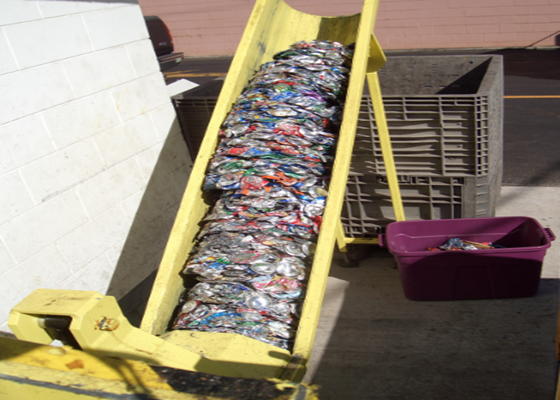
The Ministry of Environment of the Republic of Korea also said that it will try to boost the garbage recycling market that has been shrinking due to blocked exports and falling prices, and advocates the classification of civilized and environmental-friendly waste to reduce recycling costs.
As soon as the news came out, Korean netizens expressed their agreements. Some netizens said, “In this matter, there is no need to blame China. Plastic pollution is a problem in the world. South Korea should use this as an opportunity to do a good job in garbage sorting.” Some netizens suggested that “over-packaging should be reduced.” And disposable items to cultivate a sense of polystyrene recycling that cares for the environment.”