As a recycling facility, our primary goal in handling EPP foam is to address the transportation challenge posed by its “large volume and light weight,” by achieving volume reduction through physical compression, thereby paving the way for subsequent recycling. The specific process is as follows:
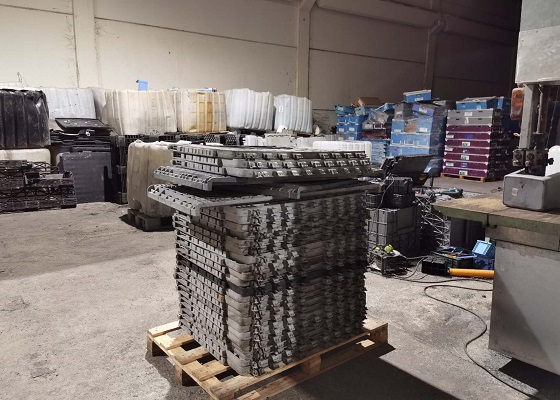
- Waste Collection and Preliminary Sorting
Sources: Receiving production scrap from factories (such as offcuts from automotive parts), logistics packaging waste (such as cushioning foam for electronics), and post-consumer discarded products (such as coolers and storage boxes).Sorting: Manually remove impurities such as tape and stickers, and grade by color (Grade A pure white, Grade B colored), ensuring the cleanliness of the waste to increase its recycling value. - Crushing and Pre-treatment
Use an EPP foam crusher to break large waste pieces into uniform particles (with adjustable particle size), suitable for the feeding requirements of subsequent compression equipment. For example, Yujian Technology’s crushers can handle EPP storage boxes, toolboxes, etc., and the crushed particles are easier to compress.
3.Core Compression Process
Physical compression is carried out using a cold-press foam compactor (mainstream equipment):Principle: Crushed EPP particles are pressed into high-density blocks through a screw hydraulic device, expelling air from within.Volume Reduction Effect: The volume can be compressed to 1/50 of the original, significantly reducing transportation costs.Alternative: For higher density, a foam hot-melter (electrically melted into blocks) can be used, though it consumes more energy. - Transportation of Compressed BlocksThe compressed EPP blocks (about 10kg each) are packaged and transported to recycling pellet plants or molding factories for the next stage of processing.
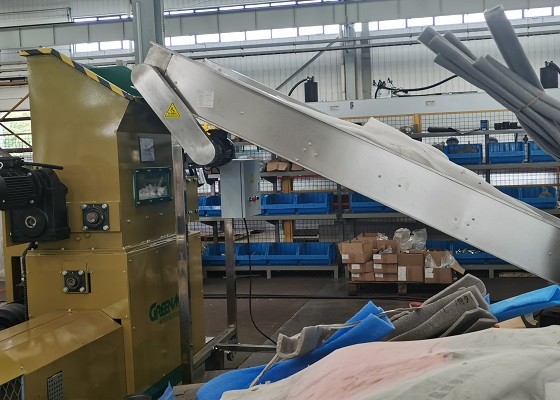
2.Core Advantages of EPP Foam Recycling
From the perspective of recycling station operations, the value of EPP foam recycling is reflected in the following aspects:
1.Environmental Friendliness
EPP is a 100% recyclable and environmentally friendly material, free of plasticizers or harmful foaming agents, and the recycling process does not produce toxic gases. Cold pressing technology requires no heating or chemical solvents, consumes low energy, and causes no secondary pollution.
- Significant Economic Benefits
Volume reduction and cost savings: Transportation costs are reduced by 98% after compression (for example, 1 ton of EPP foam has an original volume of about 50 cubic meters, which is reduced to only 1 cubic meter after compression).Value-added waste: The compressed blocks can be sold as recycled raw materials. For example, Grade A pure white waste sells for about 5 yuan/kg, and Grade B sells for about 3.5 yuan/kg. - Ease of Operation
Cold pressing machines have a high degree of automation, allowing non-professionals to quickly operate them with low maintenance costs.Strong equipment adaptability: Can process various foams such as EPP and EPS, suitable for factories, logistics parks, community recycling stations, and other scenarios.