With the increasing severity of global plastic pollution, especially the widespread application of EPS foam in packaging and construction, the recycling of foam plastics has become a key link in solving environmental pollution. EPS foam has the advantages of light weight, good thermal insulation and cushioning performance, but its large volume and low density make the recycling process challenging. In order to improve recycling efficiency and reduce transportation and storage costs, Hydraulic Foam Compactor, as an important recycling equipment, plays a vital role in the recycling process of EPS foam.
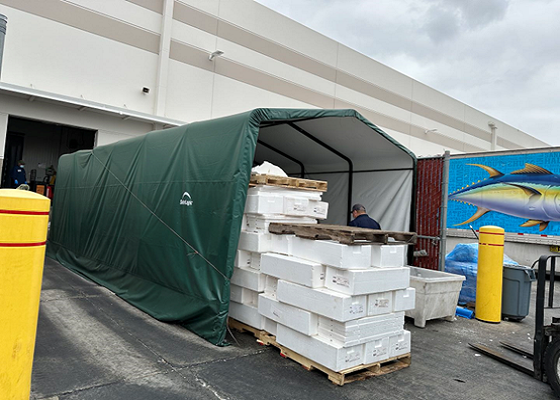
Difficulties in the recycling of EPS foam
EPS foam, as a typical lightweight material, has an air content of about 90-98%, resulting in its very bulky volume. Due to their large size and susceptibility to contamination, conventional recycling methods are difficult to achieve efficient disposal. In addition, traditional waste recycling systems often struggle to process this type of foam, which makes EPS foam often discarded in landfills, further exacerbating the environmental pollution problem.
Therefore, it is particularly important to develop effective equipment that can reduce the volume of EPS foam and increase the recycling rate.
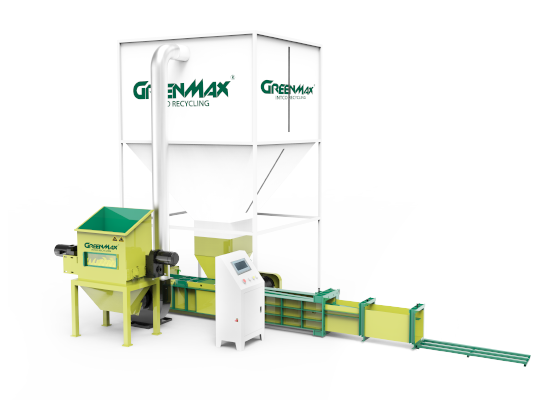
How the Hydraulic Foam Compactor works
Hydraulic Foam Compactor is a device that compresses EPS foam into a dense block through a hydraulic system. By using hydraulic pressure, the machine is able to squeeze the air out of the foam and significantly reduce the volume of the foam by high-pressure compression. This compression process not only reduces the volume of the foam for easy transport and storage, but also removes some surface contaminants, thus increasing the efficiency of subsequent recycling.
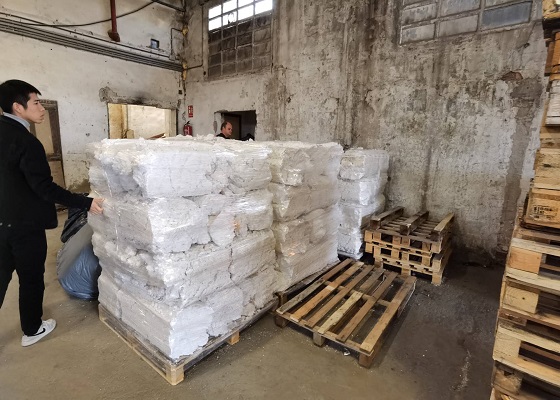
Due to the huge volume of EPS foam, traditional transportation methods are both expensive and inefficient. Hydraulic Foam Compactor can compress foam into dense blocks, reducing the volume of waste foam and significantly reducing transportation and storage costs. At the same time, the compacted foam is small in volume, which is convenient for multiple transportation and improves the overall efficiency of the recycling system. The compression ratio of GREENMAX Hydraulic Foam Compactor can reach 70:1, which is higher than traditional screw extrusion, but not as high as hot melt technology.
With the continuous advancement of recycling technology, the performance of hydraulic foam compactors is also constantly improving. Future hydraulic foam compactors may integrate more automated and intelligent functions, such as automated feeding, compression pressure adjustment, real-time monitoring, etc., to improve operating efficiency and equipment life.