Styrofoam, often referring to EPS foam used for packaging and protection, is one of the most frustrating waste streams for warehouses, retailers, and manufacturers. It piles up quickly, looks like “nothing,” and yet it costs real money to manage because transportation is priced by volume. Many businesses would like to recycle it, but loose foam is too bulky to store efficiently and too expensive to ship, so it often ends up treated as a disposal problem rather than a recoverable resource. A styrofoam recycling machine changes the economics by converting lightweight foam into a dense, uniform product that can be handled like a commodity. When that machine is paired with a guaranteed outlet, the result is not just better waste management—it is a pathway to consistent profit.
The most common reason styrofoam recycling stalls is uncertainty. Even if a facility can densify foam, it may still struggle to find stable buyers, agree on quality requirements, or coordinate pickups. That uncertainty turns recycling into an extra task with unpredictable returns. GREENMAX addresses this gap with a looped model that connects equipment and market. Businesses install a styrofoam recycling machine to densify their foam on-site, and GREENMAX provides a buy-back pathway for the densified blocks. In other words, the solution is designed around both sides of the equation: producing a market-ready output and ensuring there is a dependable route for that output to re-enter the recycling chain.
This circular resale model improves profitability in several practical ways. First, it converts a recurring cost into a controllable stream. Instead of paying frequently to haul away loose foam, the facility compresses it into compact blocks, reduces pickup frequency, and lowers storage pressure. The operational benefits are immediate: less clutter, fewer emergency waste runs, and less labor wasted breaking down mountains of packaging. Those savings alone often make a compelling business case, but the resale loop adds a second layer by turning densified material into something that has value beyond “being gone.”
Second, the buy-back pathway reduces the risk that typically discourages investment. Many companies hesitate to purchase equipment if they are unsure where the material will go after processing.
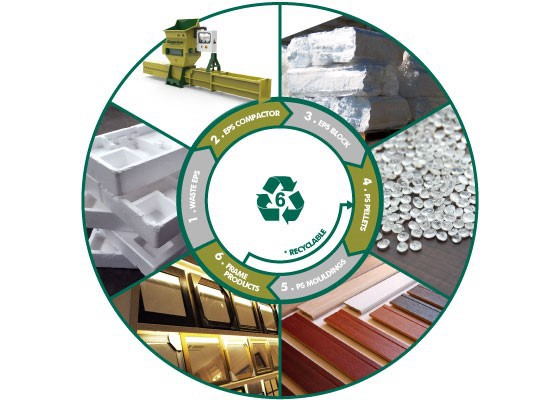
GREENMAX’s model is built to remove that hesitation by creating a clearer route from foam generation to recycling demand. When businesses know that densified blocks can be sold back through an established channel, the recycling workflow becomes more predictable and easier to justify internally. Predictability matters: it turns recycling from a “nice idea” into a repeatable operation that can be planned, scheduled, and managed like any other part of the facility.
Third, the loop encourages better material discipline, which further improves returns. When a facility has a defined outlet, it becomes worthwhile to keep EPS cleaner at the source—separating it from trash, minimizing contamination, and standardizing storage. Cleaner input means smoother machine performance and higher-quality blocks, which supports stronger resale outcomes and fewer operational interruptions. Over time, many sites find that the densifier is not just a machine, but a catalyst for a more efficient packaging workflow.
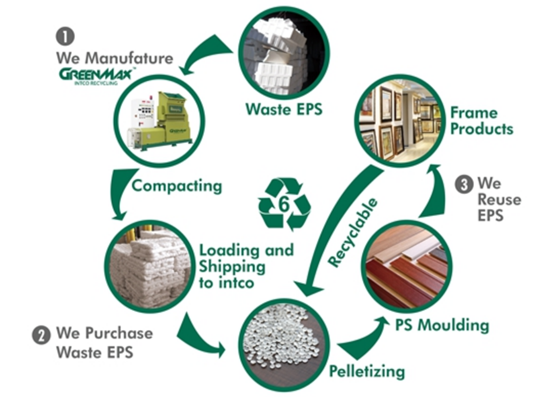
At its core, profitability in styrofoam recycling comes from closing the gap between “processing” and “selling.” A styrofoam recycling machine can densify foam, but GREENMAX’s circular buy-back model helps complete the business loop by aligning equipment, logistics, and offtake into one system. The result is a solution that can reduce waste costs, improve warehouse efficiency, and create an ongoing recycling revenue channel—turning styrofoam from a bulky liability into a managed, value-producing resource.