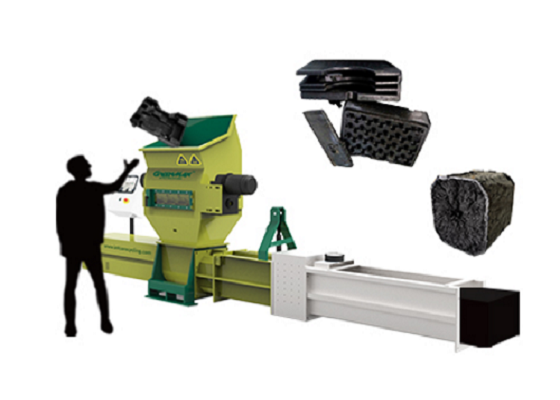
- The importance of EPP foam recycling
EPP (expanded polypropylene) is widely used in automotive parts, packaging cushioning, children’s toys, sports equipment and other fields due to its high elasticity, impact resistance and good recyclability. However, if a large amount of scraps, defective products and waste EPP after use cannot be effectively recycled, it will not only waste resources but also cause a certain burden on the environment.
Using foam recycling machine to process EPP can not only reduce waste stacking, but also recycle it, but there are still many challenges in actual operation. - Major difficulties that may be encountered during the recycling of EPP foam
High material elasticity, difficult compression
EPP is not as brittle and compressible as EPS; it has good elasticity and toughness, making it rebound easily and not easily compacted by traditional foam recycling machines. Solution: Choose a powerful spiral hot-melt machine, and improve compression efficiency through the synergy of heating and spiral advancement.
High melting point, high requirements for thermal treatmentThe melting point of EPP is about 130℃-160℃. If the temperature is not controlled properly, issues may arise:Temperature too low: unable to melt, equipment jams;Temperature too high: melting may become charred and yellow with odors, affecting subsequent reuse.Solution: Use a foam hot-melt machine equipped with an intelligent temperature control system to adjust heating temperature and screw speed in real time.
Diverse material forms require pretreatment
Recycled EPP foam comes in various shapes: there are large sheets of packaging material as well as fragments and off-cuts, which can easily cause material blockage or uneven feeding.
Solution: Add a pre-crushing system to crush large EPP into uniform small pieces before feeding them into the main engine.
High recycling logistics cost
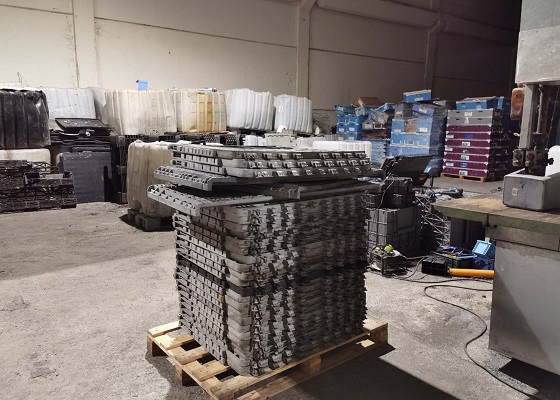
EPP is bulky and has low density in its original state, so recycling and transportation are not economical.
Solution: Set up a foam recycling machine at the recycling source, compress it first and then transport it in batches to improve economic efficiency.