With the continuous enhancement of environmental awareness and the promotion of industrial sustainability, how to efficiently recycle and reuse offcuts generated during the production process has become a pressing issue for many companies. Expandable Polypropylene (EPP) is a high-performance, recyclable foam material widely used in the automotive, packaging, and home appliance industries. However, a large amount of scrap is inevitably produced during its processing. Recycling EPP scraps using Foam Hot Melting Machines is becoming an efficient and environmentally friendly solution in the industry.

1.The Generation and Problems of EPP Scrap
During the molding and cutting process of EPP products, various shapes and sizes of waste scraps will be produced. Although these scraps have the same properties as the raw materials, their irregular shapes, large volume, and low density lead to high transportation and storage costs, as well as serious resource waste. Additionally, direct landfill or incineration also brings environmental pollution issues.
2.The Working Principle of Foam Hot Melting Machines
A foam hot melting machine is a device specially used for processing thermoplastic foam materials such as EPP, EPS, and EPE. The basic principles are:Crushing processing: Large volume scraps are crushed into small particles using a crushing device;Heating and melting: The crushed EPP particles are heated to a softened state using a heating system;Extrusion shaping: The softened material is extruded through a screw and forms dense strips or blocks after cooling;Recycling: The compressed and shaped material has a high density and small volume, making it convenient for storage and transportation, and can be used for reprocessing or made into other plastic products.
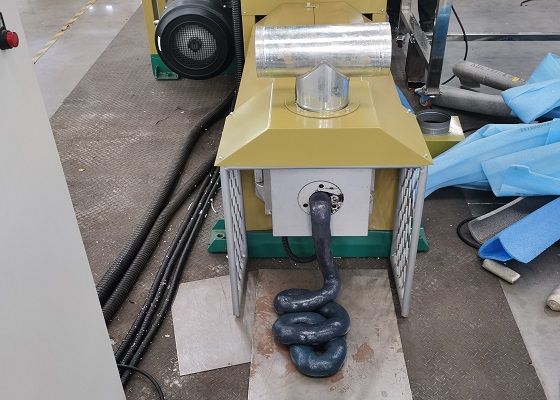
Many auto parts manufacturers and packaging companies have introduced foam melters on their production lines to recycle EPP scraps. For example, in the manufacturing process of EPP parts such as automobile bumpers and seat structural parts, the recycling system can be directly connected to the collection port of mold scraps, and the waste materials can be sent to the hot melt treatment device in real time to form a closed-loop recycling.
With the continuous upgrading of foam hot melt machine technology, its energy consumption is lower and the operation is more intelligent, which will further promote the recycling efficiency of foam plastics such as EPP. Combined with the Internet of Things and intelligent manufacturing systems, the fully automated management of scrap recycling can be realized in the future, helping enterprises achieve the goal of “zero waste” production.