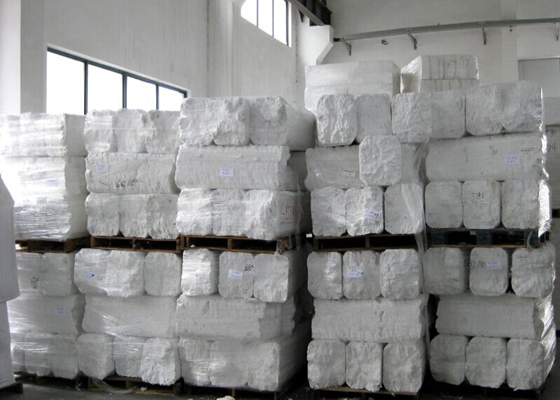
As the problem of plastic pollution becomes increasingly serious, discarded polystyrene (EPS) has become a significant challenge in urban solid waste management. EPS, commonly known as foam plastic, is widely used in packaging, building insulation, and disposable products. Due to its large volume, low density, and difficulty in degradation, it has been classified as a typical representative of “white pollution.” However, EPS waste is essentially recyclable thermoplastic, and if it can be recovered and treated using appropriate technology, it can not only alleviate environmental pressure but also be transformed into valuable recycled resources.

In this context, the application of GREENMAX EPS granulators has become an important breakthrough in the recycling industry and plastic regeneration field. This equipment can convert EPS waste into regenerated plastic pellets, providing reliable support for material reuse and green manufacturing.
1.Characteristics and Challenges of EPS Waste
EPS (Expanded Polystyrene) is a closed-cell foam material formed by expanding polystyrene resin using a foaming agent. Its main characteristics include:
- Lightweight and strong cushioning properties;
- Good thermal insulation performance;
- Not easily biodegradable;
- Large volume and inconvenient to transport.
Traditional treatment methods such as landfill and incineration not only pollute the environment but also waste resources. Mechanical recycling and granulation is one of the best ways to achieve its recycling.
2.Working Principle and Process of EPS Granulator
The EPS granulator is a mechanical device specially designed for processing discarded EPS foam. It mainly consists of a crushing unit, a melting and extrusion system, a cooling tank, and a pellet cutting system.
The working process is as follows:Preprocessing and CrushingDiscarded EPS foam is initially sorted, cleaned, and dried before entering the granulator for crushing, turning it into small particles.
Melting and ExtrusionThe crushed EPS is melted at high temperatures and uniformly mixed and plasticized through the screw extrusion system.Cooling and Pellet Cutting
The molten material is extruded into strips through a die head, cooled in the water tank, and then cut into uniform plastic pellets by the pellet cutting device.Collection and Packaging
The final product is recycled polystyrene pellets, which can be directly used in injection molding, extrusion, and other processes.
3.The Application Value of Recycled EPS Particles
The recycled PS particles obtained through the EPS granulation mechanism have good processing performance and stable physical properties, and can be widely applied in the following areas:
Manufacturing of plastic products (flower pots, hangers, stationery shells, etc.);
Shells for electrical and electronic components;Plastic materials for construction;
Injection molded parts, extruded sheet materials, etc.Compared to virgin PS materials, recycled particles are inexpensive, help reduce carbon emissions, and align with the policy direction of green manufacturing and low-carbon development.
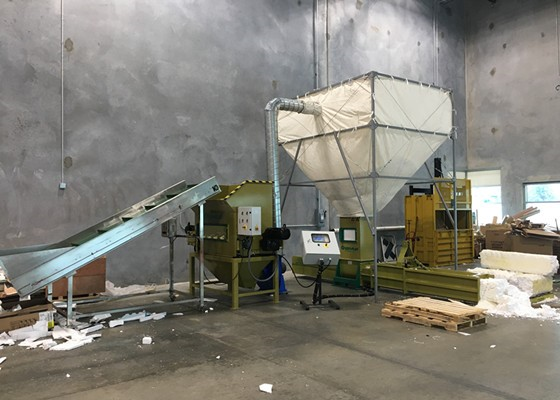
- 4.Environmental Benefits and Market Prospects
Using an EPS granulator for foam recycling not only addresses the environmental burden of discarded foam but also provides an economical and environmentally friendly source of raw materials for the plastic processing industry.
Its main advantages are reflected in:Reducing landfill volume and lowering environmental pollution;
Saving petroleum resources and promoting a circular economy for plastics;
Creating economic value through recycling and stimulating the development of the recycling industry chain.
With the government continuously strengthening policies on ‘resource utilization’ and ‘plastic pollution control,’ the recycling of EPS will become a blue ocean market for the recycling industry.