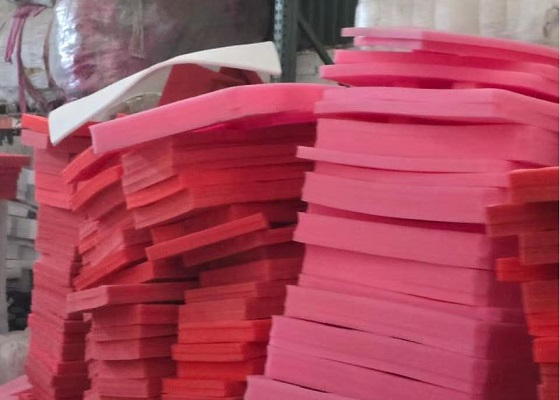
Expanded polyethylene, or EPE, is widely used in protective packaging because it is lightweight, flexible, and effective at cushioning fragile products. But those same properties also make it difficult to recycle efficiently in loose form. EPE takes up a large amount of space, creates storage pressure, and can be expensive to transport unless it is first densified. That is why an EPE densifier is becoming an increasingly practical solution for businesses looking to improve foam recycling.
In the UK, the broader recycling environment shows both progress and pressure. Official government statistics report that the provisional UK recycling rate for waste from households was 44.6% in 2023, while England’s rate was 44.0%. At the same time, the UK’s official waste datasets track packaging waste recycling by material, showing how strongly the country is focusing on packaging recovery and circular use. However, those public datasets do not usually publish a separate national recycling figure for EPE foam alone. That reflects a common reality in the market: EPE is important in packaging and logistics, but it is often counted inside broader plastics or packaging categories rather than reported as a standalone material stream.
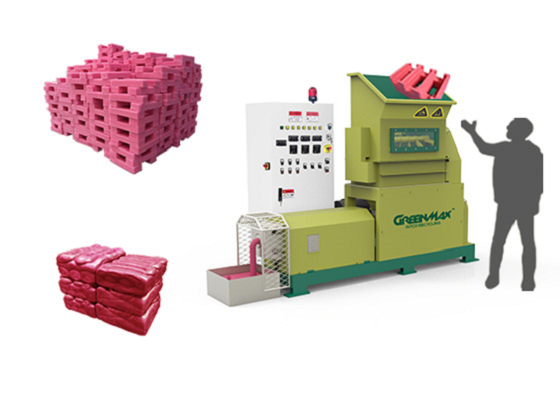
This gap between recycling targets and real operational handling is exactly where GREENMAX equipment becomes useful. GREENMAX’s PE foam densifier is designed specifically for PE foam recycling, using controlled heat to melt and densify EPE into uniform, manageable blocks. The company’s public materials describe this as a way to reduce foam volume dramatically, improve storage efficiency, and produce denser output that is easier to ship and resell. GREENMAX also notes that some of its densifier systems can handle both EPS and EPE, which is valuable for packaging users dealing with mixed foam waste.
A practical GREENMAX EPE densifier case relevant to the UK market can be understood through the kinds of packaging applications the company has already published.
In one GREENMAX case, a customer handling EPE sheet and PE film adopted a PE foam densifier to process bulky scrap on site, improving warehouse cleanliness and generating denser PE ingots that could be sold downstream. In another published example, GREENMAX describes EPE film recycling operations where standard compaction was not enough because the material rebounded and remained awkward to stack and ship, leading the user to adopt a dedicated foam densifier instead. For a UK electronics distributor, appliance warehouse, or protective-packaging converter, the same logic applies directly: install a GREENMAX densifier beside the packaging waste area, melt and densify loose EPE on site, reduce transport frequency, and turn low-density foam waste into a more tradable recycled material.
As the UK continues to strengthen packaging recovery and circular-economy policies, the companies that handle EPE waste need solutions that make recycling commercially workable, not just environmentally desirable. A GREENMAX EPE densifier offers exactly that. It helps businesses save space, lower logistics costs, and create a more efficient path from bulky foam waste to reusable value.
I should note one limitation: I did not find a clearly published standalone UK GREENMAX EPE case in the available sources, so the case paragraph above is grounded in GREENMAX’s published EPE densifier applications and adapted to a UK operating context rather than tied to a named UK customer.