In modern construction and insulation projects, XPS extruded polystyrene boards are widely used in scenes such as floors, roofs, walls, cold storage, etc. due to their excellent insulation performance, compression resistance and moisture resistance. However, a large amount of scraps generated during the construction process and waste XPS boards removed from the renovation of old buildings are often treated as garbage, causing huge waste of resources and environmental burden.
Foam Compactor is providing an efficient and sustainable solution to this problem.
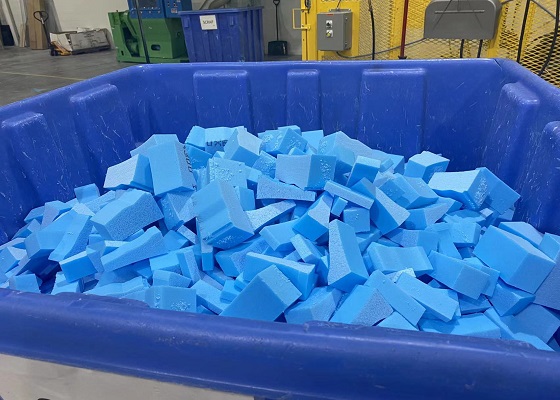
What is XPS? Why is it worth recycling?
XPS board is a high-strength, closed-cell foamed plastic insulation material with the following characteristics:
- Extremely low thermal conductivity (strong thermal insulation)
- High pressure resistance and moisture resistance
- Not easy to degrade, long life cycle
- Strong chemical stability, difficult to be naturally decomposed
Due to its “toughness”, XPS is difficult to handle once it is discarded. If it is incinerated, it may release harmful substances, posing a threat to the environment and human health.
- Recycling path: How does Foam Compactor handle XPS?
Foam Compactor is a device dedicated to recycling foam plastics (including XPS, EPS, EPE, EPP, etc.). It compresses low-density foam materials into high-density solid blocks by crushing + compression or hot melting, which is convenient for transportation and reuse.
The recycling process is as follows:
- Feeding: Putting XPS scraps or dismantled old panels from the construction site into the equipment;
- Crushing: The equipment breaks it into pellets;
- Physical compression or hot melt extrusion: XPS is compressed into a dense brick-like solid;
- Collection & Sales: The compressed blocks can be sent to the plastic recycling plant for the manufacture of recycled plastic pellets, injection molded products, gardening trays, etc.
There are two main sources of XPS recycling:
- Scraps from construction sites
- A large amount of cut scrap is discarded directly;
- It is easy to be blown away by the wind, causing secondary pollution;
- It is recommended to set up a Foam Compactor on the site to enable recycling and disposal.
- Remove the old XPS insulation board from the project
- Replacement of insulation in old buildings;
- Materials are bulky, difficult to transport, and often buried or incinerated;
- Use the mobile Foam Compactor to reduce volume in situ and reuse it in packing.
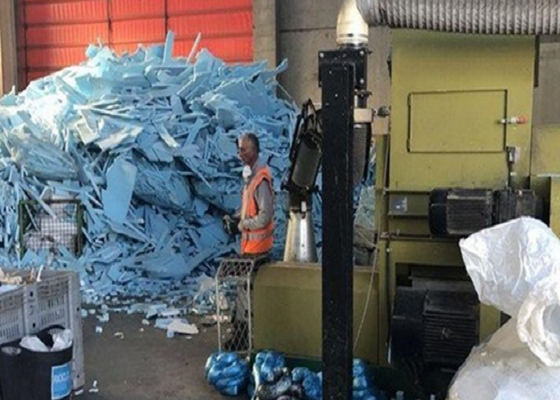
Four advantages of introducing the Foam Compactor
- High volume reduction rate and space saving
The XPS can be compressed to 1/50 of its size, greatly reducing storage and transportation costs. - Realize materials and bring profits
The compressed XPS bricks have a stable recycling channel and can be sold to recycling plants. - Reduce carbon emissions and respond to policies
Recycling has a lower carbon footprint than new material production, which is in line with the trend of carbon neutrality and green building certification (such as LEED, green three-star, etc.). - Enhance construction and brand image
Green construction sites, environmentally friendly construction, and recycling are the plus points of bidding and bidding, and they are also in line with public expectations.