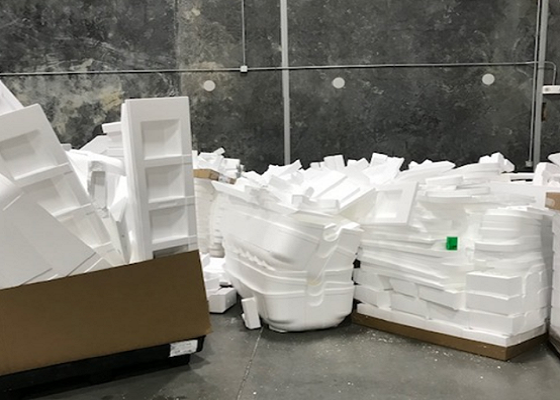
In modern life, foam boxes (usually made of expanded polystyrene, or EPS for short) are widely used in many fields such as food packaging, electronic product protection, and home appliance transportation. They are widely used because of their lightweight, thermally insulating, and seismic resistance. However, once discarded, foam boxes often fail to degrade naturally, becoming a serious source of plastic pollution, especially in landfills and oceans. With the increasing global concern for environmental protection and sustainable development, how to effectively recycle these foam boxes has become an urgent problem.
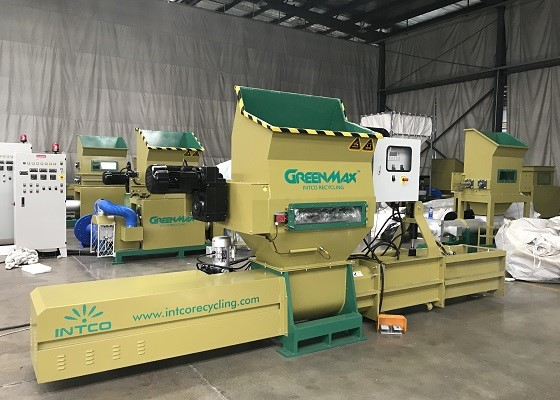
As a new type of environmental protection equipment, EPS Compactor technology provides a practical solution for the recycling and reuse of foam boxes. By efficiently compressing the foam box, the EPS Compactor not only significantly reduces the volume of waste, but also opens up new paths for a circular economy and sustainability.
What is EPS Compactor?
The EPS Compactor is a device specifically designed for the compression of expanded polystyrene foam. It reduces the volume of foam boxes and other EPS scrap to 1/10 or even less of the original through strong compression force. The equipment physically compresses the foam into a dense bulk or cylindrical solid, which not only facilitates storage and transportation, but also significantly reduces the cost and environmental burden of landfill and incineration disposal.
How does the EPS Compactor help recycle foam boxes?
Reducing volume and saving space A distinctive feature of foam boxes is that they are large and lightweight, and often take up a lot of space. With EPS Compactor technology, foam boxes can be compressed to one-tenth of their original volume or even less. This compression process significantly reduces the footprint of the foam box, making recycling and transportation more efficient and economical.
Improved recycling efficiency Efficient compression makes recycling of foam boxes easier. Compressed EPS scrap can be stored and transported more easily, reducing the difficulty of recycling due to the large size of foam boxes. The compressed material is easy to centralize and lays the foundation for large-scale recycling and reuse.
Promote the use of reuse and renewable resources Compressed EPS waste can be converted into new products through further processing. For example, compressed foam can be processed into insulation, fillers, or other plastic products for use in industries such as construction, automotive, and home appliances. In this way, EPS not only transforms from waste to a reusable resource, but also promotes the realization of a circular economy.
Reducing environmental pollution Traditional EPS waste is often landfilled or incinerated, resulting in a large amount of environmental pollution. Recycling with the EPS Compactor significantly reduces the soil, water and air pollution caused by waste foam. This not only reduces the burden on landfills, but also reduces harmful gas emissions from the incineration process, contributing to the achievement of environmental goals.
Reducing marine pollution Foam boxes are difficult to degrade in the natural environment, especially when they are discarded into the ocean, posing a great threat to marine life. By compressing the foam boxes through the EPS Compactor, these wastes can be more easily processed and recycled centrally, thereby effectively reducing the amount of EPS entering the ocean and reducing the pollution of the marine ecosystem.
Global Recycling Practices and Results
With the increasing environmental awareness, many regions and companies around the world have begun to use EPS Compactor technology to recycle foam boxes. Many cities and communities have incorporated EPS recycling into their waste sorting and recycling systems, and have disposed of foam boxes with EPS Compactor. For example, in some developed countries, EPS Compactor equipment has been widely used in waste recycling stations and commercial centers, providing an effective way to treat EPS waste.
In some regions, through government support and incentives, businesses and consumers are actively participating in EPS recycling, driving the increase in foam box recycling rates. Through these efforts, the recycling of foam boxes not only helps to reduce the pressure of waste on the environment, but also enables the recycling of resources and further promotes the development of a circular economy.